Shirin
- Duur
- 90 min.
- Jaar
- 2008
- Taal
- Perzisch
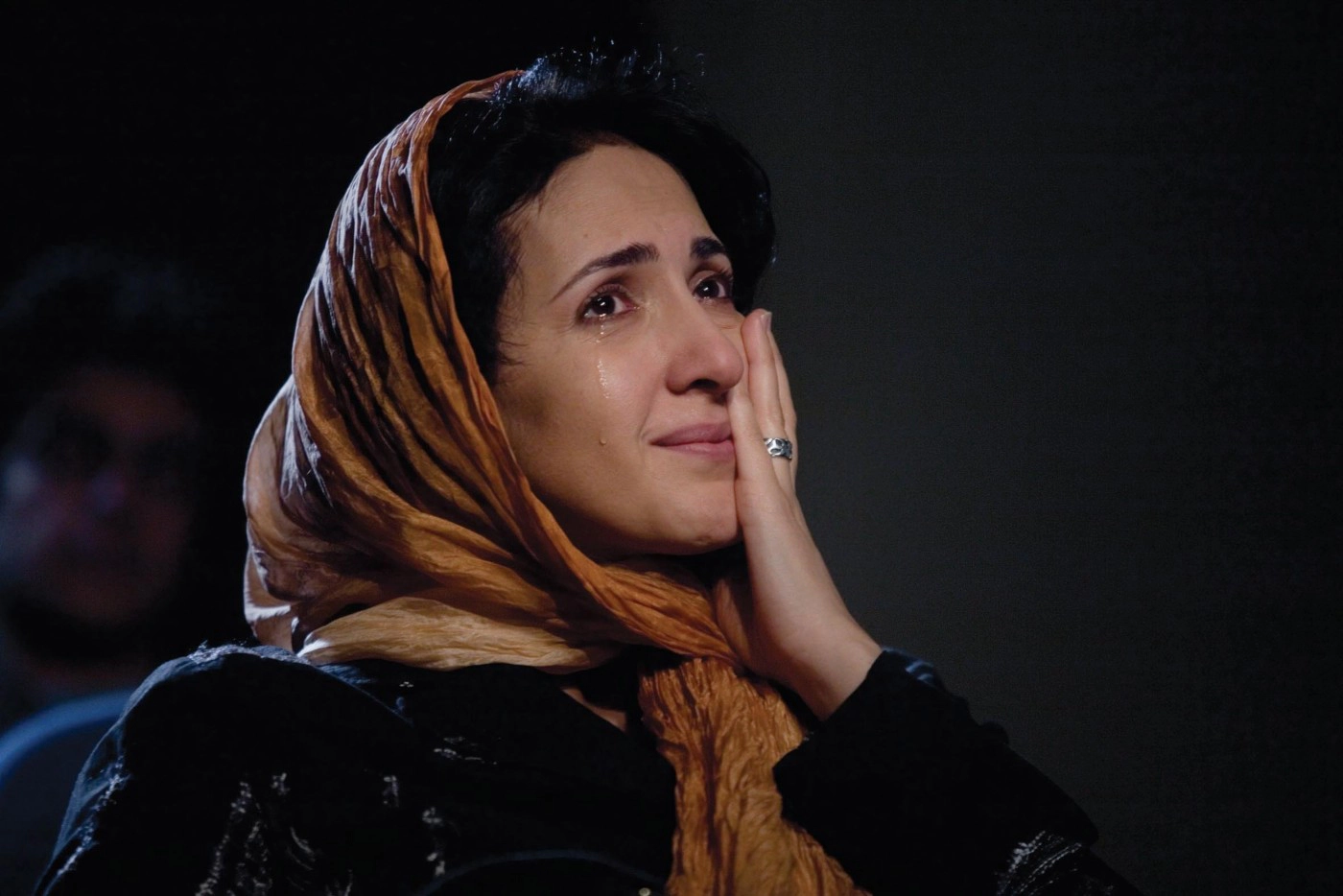
In Shirin zien we een publiek van ruim honderd vrouwen dat helemaal opgaat in een film, die zelf niet in beeld komt. In plaats daarvan aanschouwen we, in close-up, hoe het drama zich voltrekt op de gezichten van de toeschouwers. Samen vormen ze een betoverende serie vrouwenportretten.
Abbas Kiarostami wordt beschouwd als een van de belangrijkste, meest ambitieuze en bekroonde hedendaagse filmmakers. In zijn films onderzoekt hij de mogelijkheden van cinema en stelt hij de verbeelding van zijn toeschouwers op de proef.
‘Ik kan narratieve cinema niet uitstaan. Dan loop ik de bioscoop uit’, zei Abbas Kiarostami in 2001 in een gesprek met Jean Luc Nancy. ‘Hoe meer aandacht wordt besteed aan het verhaal, en hoe beter dat wordt gedaan, des te groter is mijn weerstand. Een nieuwe vorm van cinema kan alleen bestaan als meer rekening wordt gehouden met de rol van de toeschouwer. Filmmakers moeten onafgemaakte en incomplete cinema maken, zodat de toeschouwer de leegten kan opvullen. De oplossing ligt besloten in het stimuleren van kijkers, zodat zij actief en constructief deelnemen aan een film.’
De niet zichtbare film in deze film is gebaseerd op een belangrijk twaalfde-eeuws Perzisch vers van Nazimi over onmogelijke liefde en vrouwelijke zelfopoffering, een verhaal dat net zo beroemd is in hedendaags Iran als ‘Romeo en Julia’ in het Westen.
***
Abbas Kiarostami is widely regarded as one of the most important, ambitious and rewarding filmmakers at work today. With Shirin, he continues to explore the potential of cinema, stimulating and challenging the viewer's imagination to an extraordinary degree.
‘I can’t bear narrative cinema. I leave the theater. The more it engages in storytelling and the better it does it, the greater my resistance to it. The only way to envision a new cinema is to have more regard for the spectator’s role... It is necessary to envision an unfinished and incomplete cinema so that the spectator can intervene and fill the void, the gaps… The solution may lie precisely in stimulating the viewer so that their presence is active and constructive.’ (Abbas Kiarostami in conversation with Jean Luc Nancy in 2001).
What Shirin shows us – and indeed all it shows us – is an audience of more than 100 women who are deeply absorbed in watching a film we never see. We observe instead how the drama plays out on the faces of the audience, seen in close up, mostly one at a time – a mesmerizing series of portraits of women, young and old; their expressions alternately wistful, quizzical, amused, enraptured and distraught.
Based on the powerful 12th Century Persian poem by Nazami, the film-within-the-film is a story of star-crossed lovers and female self-sacrifice that is as well known in modern-day Iran as Romeo and Juliet is in the West.